MS Dhoni’s IPL Legacy: Five Titles, Unforgettable Finishes and the Rise of Chennai Super Kings
From the inaugural IPL in 2008 to five championships with Chennai Super Kings, MS Dhoni's extraordinary journey redefined franchise cricket. Relive his greatest finishes, leadership milestones, career records and the enduring legacy of Thala.
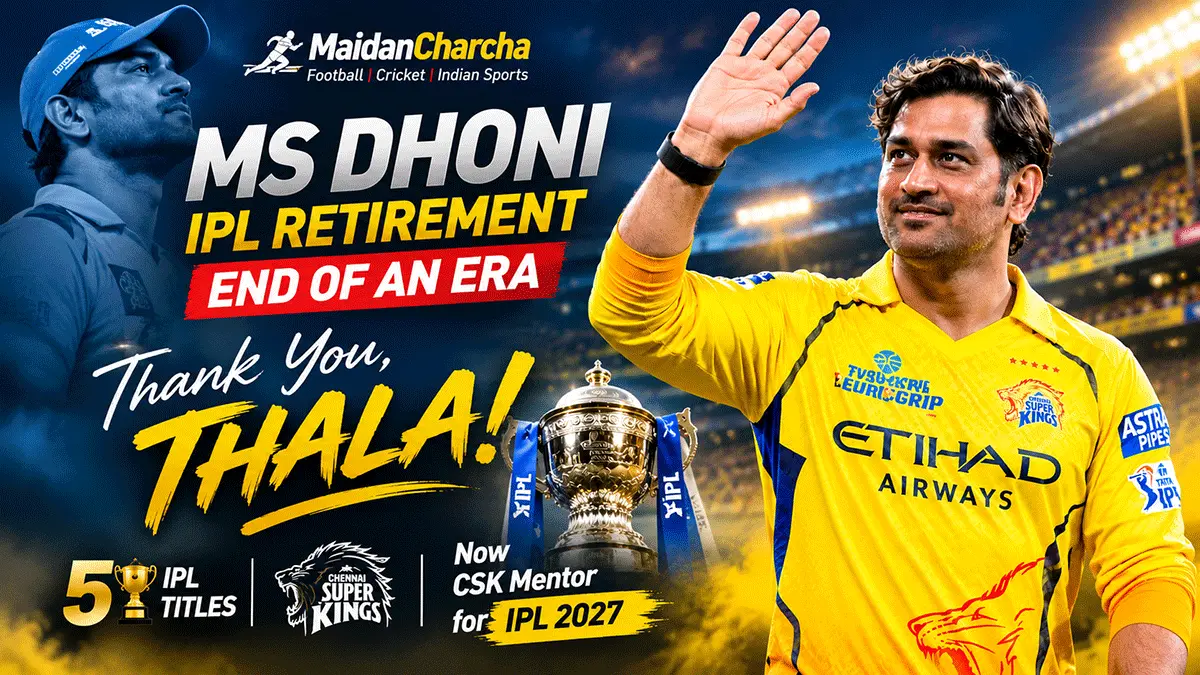
From becoming Chennai Super Kings’ first captain in 2008 to winning five IPL trophies and redefining the art of finishing, MS Dhoni leaves behind a legacy that transformed Indian franchise cricket.
When the Indian Premier League began in 2008, few could have imagined how deeply one player would become associated with a single franchise. For Chennai Super Kings, that player was Mahendra Singh Dhoni. Over nearly two decades, Dhoni transformed CSK from an ambitious new franchise into one of the most successful and recognisable teams in the history of the tournament.
Five IPL championships, ten finals as captain, extraordinary finishing performances and countless moments of tactical brilliance made him much more than a successful cricketer. He became the identity of Chennai Super Kings.
With Dhoni’s playing career now over and a new mentoring role awaiting him in IPL 2027, his journey deserves to be remembered not simply through statistics, but through the moments that defined an era.
2008: The Beginning of the Dhoni–CSK Story
The relationship between MS Dhoni and Chennai Super Kings began at the inaugural IPL auction in February 2008. Dhoni was already one of Indian cricket’s biggest stars, having captained India to victory in the inaugural ICC T20 World Cup in 2007. CSK secured his services for approximately US$1.5 million, making him the most expensive player at the inaugural auction. It was a defining investment.
Dhoni immediately became Chennai’s captain and the central figure around whom the franchise built its cricketing philosophy. His first IPL season demonstrated both his leadership qualities and his ability to contribute with the bat. He scored 414 runs in the inaugural edition as Chennai reached the final, where they narrowly lost to Rajasthan Royals. The trophy remained out of reach, but the foundations of something special had been established.
2010: The First IPL Championship
After falling short in the tournament’s early years, Chennai Super Kings finally captured their maiden IPL title in 2010. The victory was particularly significant because CSK had faced difficult moments during the league stage. Dhoni’s leadership helped the team recover, qualify for the knockout stage and eventually defeat Mumbai Indians in the final.
The triumph established Chennai as a championship-winning franchise. It also demonstrated an important characteristic of Dhoni’s captaincy: his ability to maintain confidence in his players even when results were uncertain. Rather than making constant changes, he generally preferred continuity, clearly defined roles and backing experienced performers. That approach became a defining feature of CSK.
2011: Back-to-Back Titles and a New IPL Powerhouse
Chennai’s success in 2010 was not a one-season achievement. In 2011, Dhoni led CSK to another IPL championship, defeating Royal Challengers Bangalore in the final. Chennai became the first franchise to successfully defend the IPL title. The achievement confirmed their position among the tournament’s dominant teams.
Under Dhoni, CSK developed a reputation for performing particularly well in high-pressure matches. Their success was built around a balanced squad, intelligent use of spin bowling, experienced batting combinations and a captain who rarely appeared overwhelmed by the occasion. The consecutive championships also strengthened the relationship between Dhoni and Chennai’s supporters. For fans at Chepauk, their captain was becoming something far greater than a sporting hero.
He was becoming Thala — the leader.
The Art of Finishing: How Dhoni Changed T20 Batting
Although Dhoni’s captaincy attracted enormous attention, his ability to finish matches was equally important to his IPL reputation. He developed a distinctive method of chasing targets. Instead of attacking every delivery, Dhoni often calculated the required scoring rate, identified favourable bowling matchups and attempted to take the game deep.
His confidence in the final overs created dramatic contests and unforgettable finishes. It was a method that sometimes carried considerable risk, but it also produced moments of extraordinary entertainment.
The 2016 Last-Over Assault Against Kings XI Punjab
One of Dhoni’s most remarkable finishing performances came while representing Rising Pune Supergiants in 2016. Chasing 173 against Kings XI Punjab, Pune required 23 runs from the final over. Dhoni produced a stunning late assault against Axar Patel, hitting the final two deliveries for six to complete the chase. He finished unbeaten on 64 from 32 balls. Although Pune were not competing for the title at that stage, the innings remains a memorable demonstration of Dhoni’s power and composure.
The 2019 Classic Against Royal Challengers Bangalore
Another extraordinary performance came against Royal Challengers Bangalore in 2019. Dhoni scored an unbeaten 84 from 48 deliveries, his highest individual IPL score. Chennai needed 26 runs from the final over, and Dhoni almost pulled off an improbable victory. Despite his remarkable hitting, CSK lost by just one run. The result was disappointing for Chennai supporters, but the innings reinforced Dhoni’s reputation as one of T20 cricket’s most dangerous finishers.
The 2021 Qualifier Against Delhi Capitals
In the first qualifier of IPL 2021, Dhoni produced another decisive late cameo. Chennai needed 24 runs from the final two overs against Delhi Capitals. Dhoni promoted himself ahead of Ravindra Jadeja and struck an unbeaten 18 from six balls, helping CSK secure a place in the final. The innings was brief, but its significance was enormous. It demonstrated that even as his batting role became smaller, Dhoni could still influence important matches.
2018: The Comeback That Became IPL History
The 2018 season occupies a special place in Chennai Super Kings’ history. After serving a two-year suspension in 2016 and 2017, CSK returned to the IPL. During those two seasons, Dhoni represented the Pune franchise. For Chennai supporters, the return of their team and captain was an emotional occasion.
Questions surrounded the age profile of the CSK squad, with several experienced players forming the core of the team. Critics wondered whether Chennai could compete against younger, more athletic opponents. Dhoni and his teammates delivered an emphatic answer.
CSK defeated Sunrisers Hyderabad in the final to win their third IPL championship. Dhoni himself enjoyed one of his finest batting seasons, scoring 455 runs at an average of 75.83 and a strike rate above 150. The triumph was more than another trophy. It represented the restoration of a franchise and the enduring connection between its captain and supporters.
2021: Another Championship After a Difficult Season
Chennai’s disappointing 2020 campaign raised questions about whether the franchise’s successful formula had finally reached its limits. Dhoni responded by leading CSK to another championship in 2021. Chennai defeated Kolkata Knight Riders in the final to secure their fourth IPL title.
The victory highlighted Dhoni’s ability to build effective combinations and extract performances from players with different levels of experience. Although his personal batting returns were modest, his influence on the team’s tactical structure remained substantial. The championship reinforced an important lesson from his career: Dhoni’s value to Chennai could not be measured by runs alone.
2023: The Fifth Title and an Emotional Final
The 2023 IPL final against Gujarat Titans became one of the defining moments of Dhoni’s career. Played in Ahmedabad and affected by rain, the contest developed into a dramatic conclusion. Chennai needed ten runs from the final two deliveries. Ravindra Jadeja struck Mohit Sharma for a six and a four to complete a remarkable victory.
CSK secured their fifth IPL championship, drawing level with Mumbai Indians’ title tally at the time. For Dhoni, it was another extraordinary achievement as captain. For Chennai supporters, the scenes that followed were unforgettable. The image of Jadeja celebrating with Dhoni became one of the most memorable moments in the franchise’s history. Although Dhoni did not score in the final, his leadership throughout the tournament had helped Chennai reach the summit once again.
Five IPL Titles: The Dhoni Championship Years
| Season | Final opponent | Result |
|---|---|---|
| 2010 | Mumbai Indians | CSK won by 22 runs |
| 2011 | Royal Challengers Bangalore | CSK won by 58 runs |
| 2018 | Sunrisers Hyderabad | CSK won by 8 wickets |
| 2021 | Kolkata Knight Riders | CSK won by 27 runs |
| 2023 | Gujarat Titans | CSK won by 5 wickets (DLS) |
Each championship came with different challenges. Some teams relied heavily on experienced players, while others featured emerging talents and new combinations. The common factor was Dhoni’s ability to establish roles, manage pressure and maintain a competitive environment.
MS Dhoni’s IPL Career Records
Dhoni’s career numbers illustrate both his longevity and his consistency.
| Statistic | Career record |
|---|---|
| IPL matches | 278 |
| Runs | 5,439 |
| Batting average | 38.30 |
| Strike rate | 137.45 |
| Highest score | 84 not out |
| Half-centuries | 24 |
| Sixes | 264 |
| IPL titles as captain | 5 |
| IPL finals as captain | 10 |
| IPL teams | Chennai Super Kings, Rising Pune Supergiant |
His 5,439 runs are particularly impressive considering that he spent much of his career batting in the middle and lower-middle order. Unlike opening batters, Dhoni frequently entered matches with limited deliveries remaining. His role demanded immediate acceleration, effective strike rotation and the ability to manage difficult run chases.
The Wicketkeeper Who Controlled the Game
Dhoni’s contribution behind the stumps was another major part of his IPL legacy. His exceptional reflexes, quick stumpings and ability to read batters made him one of the tournament’s most influential wicketkeepers. He finished his IPL career with 158 catches and 47 stumpings as a wicketkeeper. But his influence extended beyond dismissals.
Dhoni regularly communicated with bowlers, adjusted field placements and anticipated how batters might respond to particular deliveries. His partnership with spin bowlers was especially important on Chennai’s traditionally spin-friendly home surfaces. For many young wicketkeepers, his technique and awareness became a model to study.
Why Dhoni’s Captaincy Was Different
Dhoni’s captaincy was built on several qualities that distinguished him from many contemporaries.
Trust in Players
Dhoni frequently backed players through difficult periods. He understood that confidence could be as important as technical ability, particularly in a tournament where performances are judged almost every few days.
Calmness Under Pressure
His composed behaviour became one of his most recognisable characteristics. Whether Chennai were defending a modest total or chasing a difficult target, Dhoni generally avoided visible panic. That calmness often influenced the entire team.
Understanding Matchups
Dhoni was particularly effective at identifying which bowlers were best suited to specific batters and match situations. His field placements, bowling changes and tactical adjustments frequently shaped close contests.
Building a Consistent Team Identity
Chennai became known for experienced players, defined responsibilities and strong dressing-room relationships. The franchise did not always have the youngest or most fashionable squad. But under Dhoni, it repeatedly found ways to compete for championships.
Chepauk, the Yellow Army and the Rise of ‘Thala’
Perhaps Dhoni’s greatest achievement was the emotional connection he established with Chennai. He was born in Ranchi and represented India across the world, yet Chennai embraced him as one of its own. The MA Chidambaram Stadium became the centre of that relationship. Thousands of supporters wearing yellow jerseys transformed CSK home matches into extraordinary spectacles.
The chant of Dhoni! Dhoni! became one of the IPL’s most recognisable sounds. Even during seasons when he was no longer at his batting peak, supporters travelled across India hoping to watch him play. The number seven jersey became a symbol of loyalty, success and belonging. Few players in franchise cricket have inspired such a lasting relationship with one city.
The Final Playing Years: From Captain to Senior Statesman
Dhoni handed over the CSK captaincy to Ruturaj Gaikwad ahead of IPL 2024. The decision represented an important step towards the franchise’s long-term future. Although Dhoni continued playing, his role increasingly focused on wicketkeeping, short finishing cameos and supporting the team’s younger leadership.
During IPL 2024, he scored 161 runs at a strike rate above 220, showing that he could still provide explosive batting in limited opportunities. He returned to the captaincy temporarily in 2025 after Gaikwad suffered an injury. However, injuries prevented Dhoni from appearing during the 2026 season.
His retirement announcement in November 2026 formally ended a playing career that had stretched from the IPL’s inaugural season to the modern era.
MS Dhoni’s Influence on the IPL Goes Beyond Chennai Super Kings
Dhoni helped shape the IPL in several lasting ways. He demonstrated that experienced players could remain valuable in a fast-evolving T20 competition. He elevated the importance of tactical captaincy and encouraged teams to think more carefully about matchups, bowling resources and finishing roles. He also showed how a player could become central to a franchise’s identity.
The relationship between Dhoni and Chennai became a model of continuity in a league where squads and personnel frequently change. His influence can be seen in the way franchises now value leadership, dressing-room stability and long-term planning.
The Legacy That Will Remain
Five IPL titles tell an extraordinary story, but they do not fully explain MS Dhoni’s importance to Chennai Super Kings. His career was defined by resilience, tactical intelligence, remarkable finishes and a rare ability to inspire confidence in teammates. He helped build a franchise that became synonymous with consistency and success. He gave Chennai supporters unforgettable evenings, from the first championship in 2010 to the emotional triumph of 2023. And he transformed the number seven jersey into one of the most recognisable symbols in Indian cricket.
As Dhoni begins his next chapter as CSK mentor, his influence on the franchise will continue. The IPL will produce new captains, new finishers and new champions. But the story of Chennai Super Kings will always begin with MS Dhoni.
Five titles. Countless memories. One Thala.
Related Stories